
Like this post? Help us by sharing it!
Cherry blossoms – or sakura – are one of Japan’s most recognisable seasonal markers, rich in symbolism as well as beauty. What began as a pastime for Heian-era nobles later became a symbol of impermanence for the samurai – a metaphor for dying young in battle, in a burst of glory. Today, sakura still carries cultural weight. As Japan specialist Tyler puts it: “the whole year revolves around the sakura” – with school years ending and new jobs beginning as the petals bloom.
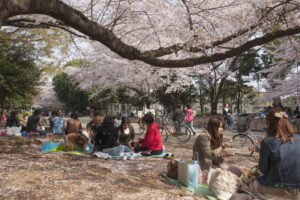
It’s peak season for travel and a moment of celebration and coming together for locals. Parks fill with people laying down blue tarps, gathering for picnics beneath the blossoms. Knowing when to go, how to join in, and where to avoid the busiest spots can make all the difference. This is our guide to doing cherry blossom season right.
Five petalled blooms – and the first signs of spring
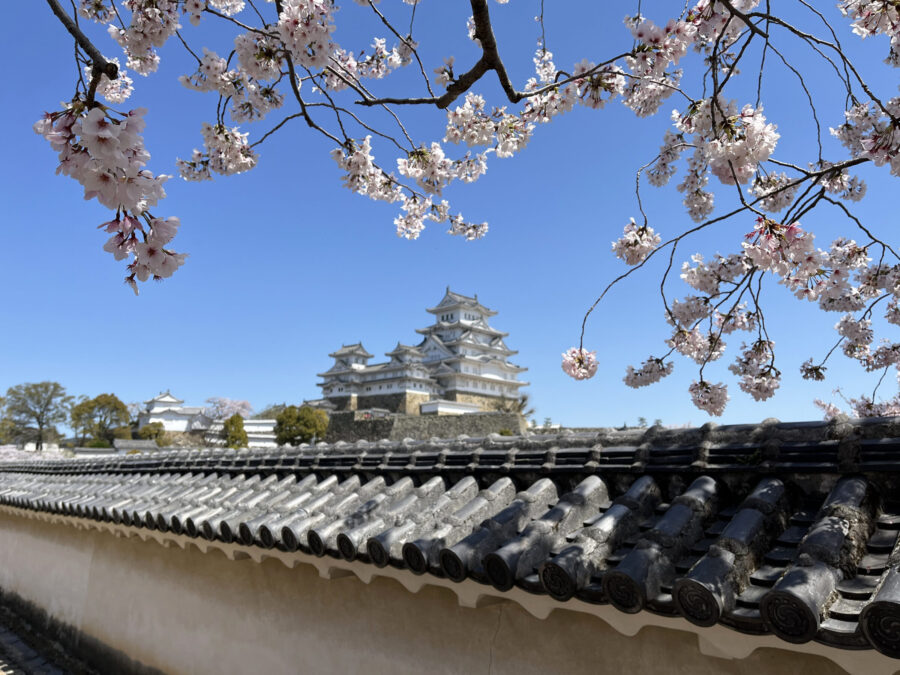
Japan is home to over a hundred varieties of cherry tree, but one dominates the season: the somei yoshino. With its pale, five-petalled blossoms, it’s the tree you’ll see most often – lining riverbanks, circling castles, and filling social media feeds. Shidarezakura, or weeping cherries, are less common but particularly photogenic, with branches that arch low and flutter in the breeze. You’ll often find them near temples or shrines, where they’re prized for their elegance and symbolism.
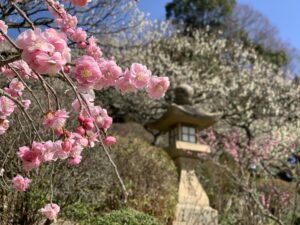
Cherry blossoms aren’t the first sign of spring in Japan, however. That honour goes to the plum blossom – smaller, stronger-scented, and hardy enough to bloom in the chill of February. It’s a favourite among locals and a great option for travellers who visit earlier in the year, when the skies are crisp and the parks are blissfully uncrowded.
So when should you go?
It’s one of the questions we get asked most – and one that doesn’t have a perfect answer. Cherry blossom forecasts are released and updated daily in the run-up to the season, but the timing shifts slightly each year. Weather, altitude and location all play a role – and the peak is never set in stone.
What we can say is this: if you’re travelling in March or April and travelling across the country, you’ll almost certainly see cherry blossoms somewhere in Japan. Exactly where depends on the timing of your trip and the route you take.
That’s why we always recommend going beyond the Golden Route spots (Osaka, Kyoto, Hakone and Tokyo). Go no further north than Tokyo, or no further south than Kyoto, and your chance of catching the blossom slims, particularly if the season starts early or later than expected. And with these cities’ popularity, you could find yourself shoulder-to-shoulder with thousands of others in main parks.
Instead, think broader. Head south – Hiroshima , for example, or Kyushu, the most southerly of Japan’s four main islands – and move northwards, through Toyama, Nikko or even into the Tohoku region. The city of Hirosaki is famous for its late April cherry blossom (and features as part of our Japan’s Undiscovered North itinerary). Altitude can also play a role, with higher locations blooming slightly later. It’s all about giving yourself options. If the trees aren’t blooming in one place, they probably will be in the next.
The real heart of the season: hanami
Hanami means “flower viewing” – but the experience is much more social than the phrase suggests. It’s about friends and families gathering under the trees with food, drink, and time to spare. It’s about marking the end of winter and the start of something new.
Office workers take their lunch under the blossoms. Families set up full-day picnics. Students toast with cans of beer from the nearest konbini. Everyone brings something to sit on, and everyone takes their rubbish home – even when bins are nearby.
If you want to join in, do as the locals do:
• Pick up a blue tarp from a 100-yen shop – it’s the national favourite picnic blanket
• Stock up at a convenience store (konbini) – beer, sake and fried snacks are the norm
• Don’t pick the blossoms from trees – admire them on the tree or gather petals that have already fallen
And remember the saying hana-yori-dango – “dumplings before flowers”. It’s a playful reminder that the company and the food often matter more than the aesthetics of hanami.

Where to go for a different view
Cherry blossoms bloom all across Japan – from tiny mountain villages to megacities – but that doesn’t mean the experience is the same everywhere.
In Tokyo, famous spots like Ueno Park, Shinjuku Gyoen and Yoyogi Park are always lively, but also very busy. For something a little more relaxed, try Hibiya Park, walk along the Chidorigafuchi castle moat or stop by the great weeping cherry blossom of Rikugien gardens.
For a more squarely “Japanese” feel, head to the city of Toyama , two hours from Kyoto. It’s often overlooked, but during sakura season, cherry trees line the castle moat and the banks of the Funagawa River. The reflections alone are worth the journey – and the crowd is made up almost entirely of locals.
Another favourite is Inuyama, half an hour from Nagoya (InsideJapan’s home). Its 16th-century castle is one of only twelve originals left in Japan, and its elevated setting above the Kiso River makes for a spectacular hanami backdrop. Despite its beauty, it remains a quieter, more local spot – perfect if you’d rather picnic than jostle for photos. And it’s an easy add-on to our Samurai’s Footsteps itinerary.
Beyond cherry blossoms
Blooms don’t stop with cherry blossom, and neither does the national obsession with them. As spring creeps into summer, other blooms burst into colour – and these too are celebrated.
From April onwards, azaleas start to dominate the landscape. Nezu-jinja Shrine in Tokyo holds an annual festival that’s a personal favourite of our team member Tyler, who swears the blooms ““are just as impressive as any sakura”.
Then come the hydrangeas, starting early summer, especially in places like Kamakura, where entire temples are surrounded by them. There’s even a viewing festival – much less hectic than cherry blossom season, but just as rewarding.
In the end, cherry blossom season isn’t just about catching the peak bloom or getting the perfect photo. It’s about taking part in something shared. And with the right planning – it’s one of the most rewarding times to be in Japan.
Shape your trip around the blooms
Our specialists know the quieter spots, and can shape a trip that works with the seasons and your planned dates – whether that means following the bloom north, adding higher-altitude spots, or weaving in lesser-known locations that many travellers overlook.