
Like this post? Help us by sharing it!

Tucked away in the hills of Hiroshima Prefecture and far from Japan’s big cities, lies Joge – a place where traditions endure and community comes first.
On first glance, its quiet streets and preserved merchant houses feel like you’re walking through history, a town stuck in past, perhaps. Yet just a short while here and you’ll realise that this is a place where the community is working to protect its future, by preserving its traditions.
Joge offers something many travellers don’t realise they’re missing: a chance to experience Japan beyond the highlights – as travel specialist, Marina, found when she visited as part of our Hidden Japan Small Group Tour.
A tenryo town
What first-time visitors may not see is just how deep the town’s history runs.
Joge is what’s known as a tenryo town, meaning land that was once under the direct control of the Tokugawa shogunate during the Edo period. This meant it wasn’t just another rural village, but an important administrative and economic hub, where officials, merchants, and travellers once passed through.
A community shaped by generational pride
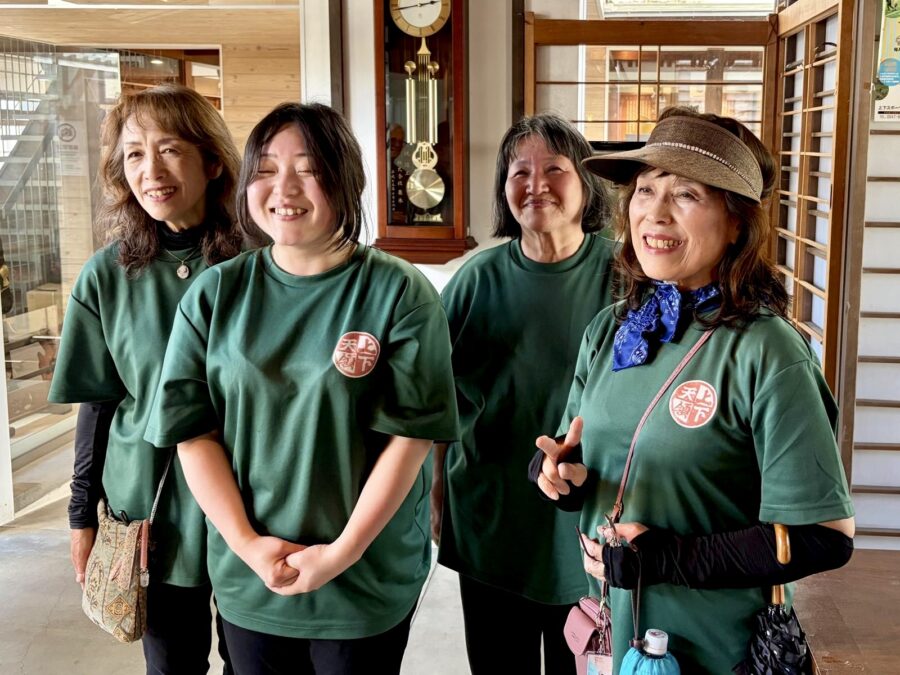
When I arrived, it was evident the locals were not only the friendliest of people, but also had deep roots in this town and a distinct pride for the place they call home.
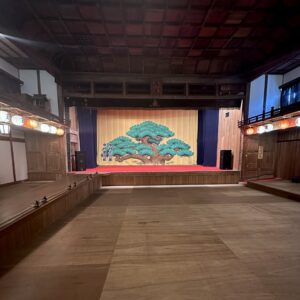
Some were born and raised here, others married into the town decades ago. However, they all share a strong sense of purpose in preserving it. One local, now a member of the town’s cultural museum and visitor centre, grew up in Joge and continues to share its stories alongside her daughter. Together, they host tours of the town, sharing not only its history but also stories of the personal significance for each stop. Visiting the local souvenir shop that’s been in the family for generations, walking through the streets where Morimoto-san (our day guide) grew up, or seeing the theatre in which her friends and family have performed. To these locals each place doesn’t just hold historical significance, but a personal one as well. It makes the tour feel less like walking through an abstract past but rather enjoying present day life.
Historically, Joge thrived as a post town along the Ginzan Kaido, or “Silver Road,” which transported silver from the Iwami Ginzan mines across western Japan. As a stop along this route, it became a lively centre of trade, with merchants, artisans, and travellers shaping the town’s identity.
Today, that same main street is still intact. With narrow streets, whitewashed buildings with weathered woodwork and centuries old tiled roofs and small shops that expand into the family home.
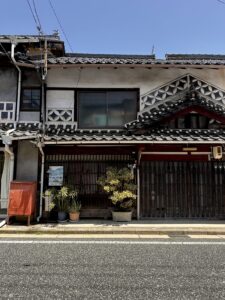
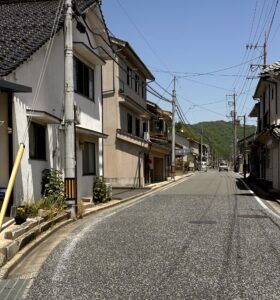
Like many rural areas in Japan, Joge has faced change. Its population has significantly declined in the last five decades as people moved to surrounding cities for job opportunities, schools consolidated from six buildings down to two, and the town was briefly absorbed into the larger city of Fuchu, meaning some long-standing community events have faded over time.
And yet, what stands out most is the determination to keep going, as lifelong resident of Joge, Morimoto-San, emphasised when I spoke to her.
“We want to preserve this town as it is…just as our parents did”.
Fighting atarimae through preservation
For me, what makes Joge remarkable isn’t simply how it looks, but how its residents care about it.
Preservation here goes beyond maintaining a pretty façade. It’s about ensuring buildings are structurally sound. Its history is respected from the inside out, so that traditions can truly last for generations to come. It’s a process that’s rooted in respect.
There’s a Japanese concept, atarimae, which means to take something for granted, or simply accept it as “the way things are.” In Joge, locals are consciously pushing back against that idea.
“We don’t want this place to be taken for granted.” says Morimoto-San. “We want people to visit and appreciate the culture and traditions that generations before us worked so hard to preserve”.
This mindset shapes everything and it’s something you feel immediately when you visit.
Unforgettable hospitality: the Joge difference
Beyond the drive to preserve traditions was the genuine welcome I received from the whole community.
Around ten years ago, when international visitors first began arriving, many locals were unsure, mainly because they didn’t feel confident speaking English. But instead of letting that hold them back, they leaned in and learned the language. They showed up. They found ways to connect.
“We treat all visitors the same” says Morimoto-San. “We don’t gatekeep. Everyone is welcome here.”
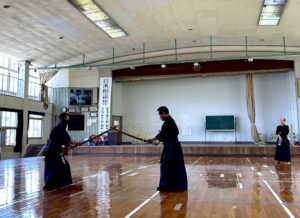
As a visitor, I immediately felt welcomed with open arms, not just through polite interactions, but in the small thoughtful moments. We were invited to watch and participate in a local kendo class (a form of Japanese martial arts), treated to a delicious lunch from a local café, given a historic tour of the town, and gifted handmade crafts. I was given a clutch bag made from a beautiful textured peach fabric. I was hesitant to accept the gift. The locals had already done so much for me, but they smiled and insisted I take it. They explained it brought them great joy to have had me as a visitor and wanted to thank me. It was an unexpected gesture that spoke volumes.
We were welcomed in such a way that I didn’t feel like we were just passing through as tourists, but rather that we were invited into every day life.
A side of Japan few travellers experience
Here, the most meaningful moments aren’t the big-ticket sights, it’s the ones you didn’t expect. It’s wandering past centuries-old storefronts originally built for merchants and traders, stepping into family owned shops that have been around for generations, exploring one of the oldest Buddhist temple’s in the area, learning to draw a sword with kendo master, visiting an old kabuki theatre that now hosts local community shows, trying on a traditional bridal gown that’s been used by locals, enjoying a meal with a ginger ale made from locally sourced ginger syrup, or simply sharing a conversation with a local keen to practice their English.
As Morimoto-San says: “We hope visitors will look beyond the big sights and notice the smaller things, those details that make Joge unique.”
It’s a slice of daily life, where you don’t just see Japan but feel it. This perspective has challenged me as a traveller, to acknowledge that immersion in local daily life is much more meaningful and rewarding than just scratching off a destination to say I’ve been there and done that.

Travel that gives back
In Joge, visitors themselves play a crucial role.
By coming, they support local businesses, as a result the money spent here goes straight into preservation efforts and helping sustain traditions that have existed since the town’s days as a thriving trade hub.
That impact is tangible. Local activities are growing again, and younger generations are becoming more engaged, as Morimoto-San has noticed at the local kendo group:
“There used to be only one student. Now there are six. The children are excited by the influx of visitors; they too want to learn and share their culture.”
What Joge taught me about travel
Joge, like many rural communities, is navigating the balance between preserving tradition and adapting to modern life. But what’s clear is that the people here are committed to finding a path forward, one that protects what makes the town special without losing sight of its future.
They research, fundraise, collaborate, and care deeply about getting it right.
There’s something powerful about Joge. It doesn’t try to reinvent itself or compete for attention. Instead, it stays true to what it is and invites visitors into that authenticity.
And in doing so, it offers an important reminder.
In a time when overtourism dominates so many destinations, I truly believe places like Joge show there’s another way to travel – one that supports communities, preserves culture, and creates genuine human connections.
As Morimoto-San sums up so well, “The richness of Japan isn’t only in the cities. It’s in places like this, in the mountains, in the traditions and everyday life.”
After visiting, it’s hard not to agree.
Start your next cultural adventure with InsideJapan
Our itineraries are designed to take you beyond the crowds and into the places in between, where everyday life, culture, and human connection truly come alive.
Because sometimes, the places you’ve never heard of are the ones you’ll remember forever.
You can visit Joge on the Hidden Japan Small Group Tour.