

Like this post? Help us by sharing it!

A land of primeval forest, fishing communities and plenty of apples, Aomori is just three hours north of Tokyo by bullet train – but only 0.8% of Japan’s visitors make it there.
Come to Aomori to walk the Oirase Gorge, a designated National Special Place of Scenic Beauty, but stay longer and you’ll find fishing towns, wild stretches of coastline and one of Japan’s biggest summer festivals. More importantly, you’ll get a sense of the pride people take in keeping local traditions alive. Tour guide Mr. Fumiho sums Aomori up best: “A place where you can experience a deep, authentic side of Japan that has a completely different flavour from the country’s traditional “Golden Route’”.
Visit Aomori on Japan’s Undiscovered North
Hachinohe: a taste of Tokyo in years gone by
Board the Shinkansen bullet train north, and your first stop in the Aomori prefecture is Hachinohe. A small, coastal city, with a weekly timetable defined by its fishing industry.
Japan specialist, Will, arrived in time to hit the weekend essentials: Saturday night in the city’s tiny bars, followed by the famous Sunday morning market at Tatehana Wharf.
“Hachinohe’s yokocho (small alleys) are lined with tiny bars, packed with locals, many fishermen by trade. I drank sake and swapped stories with them for hours. People often say Tokyo felt like this in the 90s, so it felt very special to experience something similar 30 years later”.
Hachinhoe isn’t on the average Japan itinerary. English isn’t widely spoken here (Will speaks Japanese), so if you can’t communicate much further than konnichiwa, this is a good place to meet up with a guide. They’ll lead you to the best bars, help you order, then leave you to your seafood and sake before moving on to the next bar.

Sunday morning market, a coastal walk and a hot pot
For a city that is late to bed on Saturday, Hachinohe gets going remarkably early on Sunday. Tatehana Wharf morning market has over 350 stalls, and draws between 10,000 and 30,000 people from 6-9am. Arrive with an appetite for fried chicken, fish grilled out of the back of trucks, calamari, gyoza, and ramen. You may even meet the market’s unofficial squid mascot.
Once you’ve eaten your fill, head out on the Michinoku Trail. Japan’s coastline is almost 30,000 km long – and yet many visitors see little of it. The section beginning at Hachinohe passes fishing villages, grasslands and clifftop shrines. Just remember to look up as well as out to sea. Black-tailed gulls (umineko) soar above and may drop a surprise or two. Free umbrellas are available at the shrine close to the trail start, and if you do come under fire, you get a lucky omamori shrine souvenir. On a more delicious note, time your walk to reach Tanesashi Fishing Port for a hotpot lunch, made from that morning’s catch.
Big nature at Oirase Gorge
From fishing city to forest, Oirase is around an hour and a half from Hachinohe by bus.
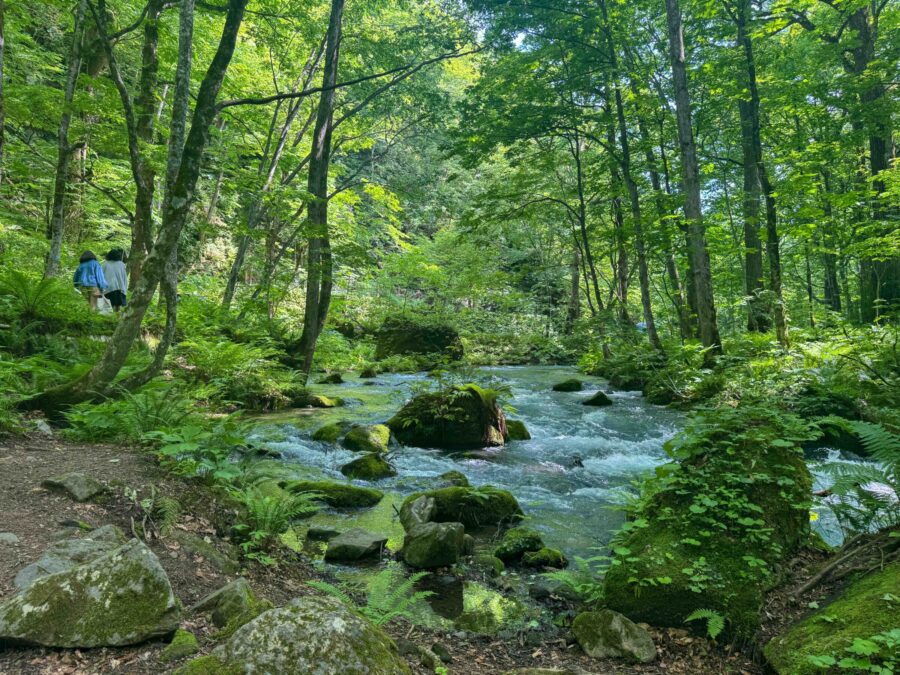
The Oirase River cuts through the gorge for 14 km, through beech, maple and katsura trees. More than 300 varieties of moss quilt the riverside rocks.
Japan specialist Chris walked the section from Ishigedo to Kumoi no Taki.
“It’s one of the prettiest forest areas I’ve ever been to – and that’s coming from someone who lives in Colorado. The river is blue and glassy in the calmer sections, then fast flowing and frothy over the rapids. The walk ends at the 20 metre-high Kumoi no Taki waterfall, where I stood for a moment and listened to the crashing water.”
Chris visited in June, when the leaves are at their greenest, and temperatures are comfortable, without the intense summer heat found further south.
Hirosaki: sweet apples, samurai farmers, and a Joppari heart
Although Hirosaki’s castle is one of the few originals to survive the end of the samurai rule, the city is perhaps as well known for its apples.
Aomori’s warm days, cool nights and snowy winters are perfect apple-growing conditions, and the fruit is a fierce point of pride here.
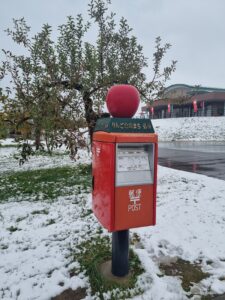
The prefecture grows 60% of Japan’s apples, and around 80 varieties (everyone has their favourite).
Apples were the answer to samurai unemployment. At the end of the Meiji Period, many of the elite class lost their status and farming became a profession many samurai turned to. Perhaps this is why that dedication to apple cultivation has infiltrated the Aomori dialect. In Aomori, a person who is passionate (or indeed, stubborn) is called Joppari. It’s common to boast of having a “Joppari heart” when it comes to apple farming.
Hirosaki is where you come to get a proper taste of Aomori’s apples, as Japan specialist, Ali, did.
“They are completely apple obsessed. There are 47 bakeries serving up Aomori apple pie (and an apple pie café map of the city), a cider factory, apple merch everywhere, and a particularly refreshing apple flavoured sorbet I couldn’t get enough of”.
If you want to pick your own, head to Hirosaki Apple Park, with 1,200 trees across 65 varieties to try.

Indigo dyeing: the “Old Japan” way
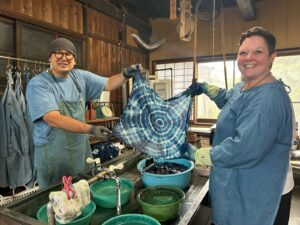
Apple growing isn’t the only tradition Hirosaki takes seriously. Japan specialist Ali visited 13th-generation master dyer Mr Kawasaki at his family’s 250-year-old indigo studio, with thick wooden beams, deep vats and Edo-period dye jars.
“Gloves and apron on, we tried a couple of designs. One with elastic bands on the cloth to make concentric circle patterns. For another, we scrunched the wet cloth and kneaded it in the indigo vat. It was good, messy fun, and we left with a pocket-sized souvenir.”
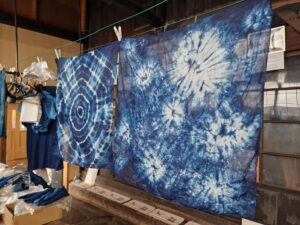
Mr Kawasaki is the latest in his family to take the reins, but his mother likes to pop in and oversee proceedings. So do studio cats, Jajamaru and Koume.
“Connoisseurs of indigo dyeing often praise our traditional hon-ai (true indigo) dyeing method using wood-ash fermentation”, explains Mr Kawasaki.
His pride in the craft work extends to Hirosaki itself.
“Hirosaki preserves a kind of simple, unpretentious history that is increasingly disappearing today. Famous tourist destinations are often carefully designed to entertain visitors, whereas Hirosaki offers a quiet atmosphere. You can appreciate the beauty of wabi-sabi and enjoy a more understated experience.”
Kuroishi: a welcoming town behind closed doors
The deeper you go into Aomori, the quieter things become. Ali caught the Limited Express train from Hirosaki through rice fields to Kuroishi.
“School children hopped on for a stop or two, there was a sleeping businessman at the end of the carriage, but apart from that, the train was empty.
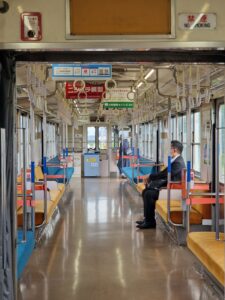
“The town was very quiet, but Kuroishi is my favourite place in Aomori because of it.
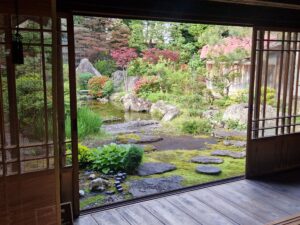
“Our guide showed us around the town, which looked shut up to the world. But he didn’t let that stop us. He rolled up the wooden shutters of a closed café (he’s friendly with the owner, he assured us). Behind was a carefully decorated, old building with a huge garden and tatami mat flooring. It felt like we had a proper backstage pass to life in a small Japanese town.”
Vegan food can be harder to come by in rural Japan, but Kuroishi surprised Ali. She had a big vegan lunch at a ryokan inn.
“The community here is keen to meet dietary requirements – they want to ensure everybody is welcome,” Ali explains.
Aomori City is home to the original summer Nebuta matsuri festival. Across the prefecture, smaller Neputa* festivals take place every August, and Kuroishi keeps the Neputa spirit going year-round.
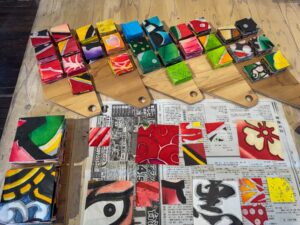
When the festival is over, locals roll the washi paper paintings off the floats. Visitors can choose brightly coloured cuttings to make their own lantern.
Japan specialist Chris did just this.
“It’s one of my favourite souvenirs, and now my best night light at home”.
Aomori City: A northern, retro outpost and home of Nebuta
Aomori City is as north as the Honshu Shinkansen trains go. Once out of the station, you may find that parts of the city feel decades removed from Japan’s more popular urban centres.
“The city has very ‘Showa era’ retro vibes,” Japan specialist,Will explains. “Like Japan 30 or 40 years ago with quirky, pastel-coloured architecture, rickety corrugated iron roofs, plant shops everywhere, and views out to sea”.
“Our guide took us through the streets lined with curiosity and antique shops. We stopped at a modern looking patisserie (and I was a little confused as to why we were there), but then, we went through to the back, where there were rows upon rows of traditional wagashi sweets.”
But Aomori isn’t a city frozen in nostalgia. For six days in August, giant illuminated floats move through the streets to the sound of drums, flutes and shouting crowds.

Festival float artist, Chia Huang, explains more.
“Aomori City is one of the snowiest cities in Japan. In a region where winter is long, the sunny days of summer are especially precious. Nebuta festival is a celebration that makes the most of a short summer.”
If an August visit doesn’t work (and accommodation can be near impossible to secure, the festival is so popular), the festival spirit lives on year-round here. Nebuta Museum Wa Rasse displays full-size floats from previous festivals, alongside performances and exhibitions on how they are made.
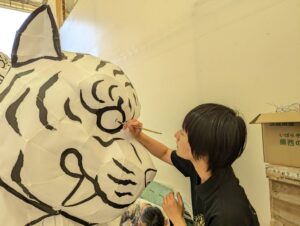
Visit the city between May and mid-July and you may be lucky enough to see the floats being made in real time, like Japan specialist, Ali, did.
“Giant marquees are set up across the city wherever there is space – temporary warehouses for teams to construct the floats before the festival. We got to poke our heads inside.
“The floats themselves were truly massive. Perhaps nine metres wide and five metres high, with people on ladders, cutting, painting, building all around us, bringing the paper sketches to life.”
Chia Huang, one of the artists at work that day, explains more.
“The Nebuta floats are a wonderful showcase of the skills and craftsmanship that have passed down through generations.”
A prefecture of pride
The people of Aomori are proud, and it is well deserved. From Mr Kawasaki’s indigo studio in Hirosaki to the Nebuta workshops in the prefectural capital.
As Chia says: “I believe everyone should visit Aomori at least once in their lifetime”.
You can visit Aomori on Japan’s Undiscovered North, or we can weave into your own tailormade cultural adventure. Speak to one of our specialists to start planning your trip.
* Not a spelling error! The subtle letter swap between Nebuta and Neputa marks a key difference. Nebuta is the festival in Aomori City, where it began. Neputa festivals are those that take place in Aomori prefecture, outside of the city itself.