

Like this post? Help us by sharing it!

So often in Japan, you know an experience is going to be memorable, even before you do it. That visit to majestic Kiyomizudera in Kyoto, for example; the climb up Mount Fuji; a night out in Tokyo’s karaoke bars. Other times, these moments are more accidental.
And as National Geographic Traveller writer, Alicia Miller, found on her first introduction to Aomori, on our Japan’s Undiscovered North itinerary, it’s these surprises that can become the most memorable moments of all.
After a couple of days in the historic samurai town of Kakunodate in neighbouring prefecture Akita – seeing samurai homes, still inhabited by local samurai families, and taking a one-to-one lesson in bushido (‘the way of the warrior’) – I figured a ride on the Gono Line was going to be a slightly more scenic route to my next stop, the city of Hirosaki. It ended up being the most spectacular train journey I’d ever taken in Japan.
A coastal introduction
Like much of the northerly Tohoku region, Aomori is largely undiscovered by visitors. Hokkaido – land of snow, skiing and Sapporo beer – just to the north often paints a more visual picture in the mind’s eye but when it comes to Aomori there’s a bit of a collective mental blank. Which is a shame, as in reality it’s anything but empty: home to original samurai castles and UNESCO World Heritage sites, rambling apple orchards and glassy rice fields, dramatic forest gorges for hiking and beaches for lounging. There are unique local crafts, and even a mini version of iconic Mount Fuji, the 1,625m Mount Iwate.
Crucially, in Aomori, there’s coastline: hugged on three sides by water, bordering both Sea of Japan and Pacific Ocean, the prefecture is shaped by water. And, as I learned, so is the Gono Line.
It was just around lunchtime in Akita when I boarded the Resort Shirakami 3, the Gono Line’s comfy sightseeing train, lined in large windows. I buried my nose in my book while the seats filled up around me, with Japanese pensioners toting packed lunches and day bags. It was several stops along the line until I looked up from my pages, and when I did I nearly dropped the book straight into my lap.
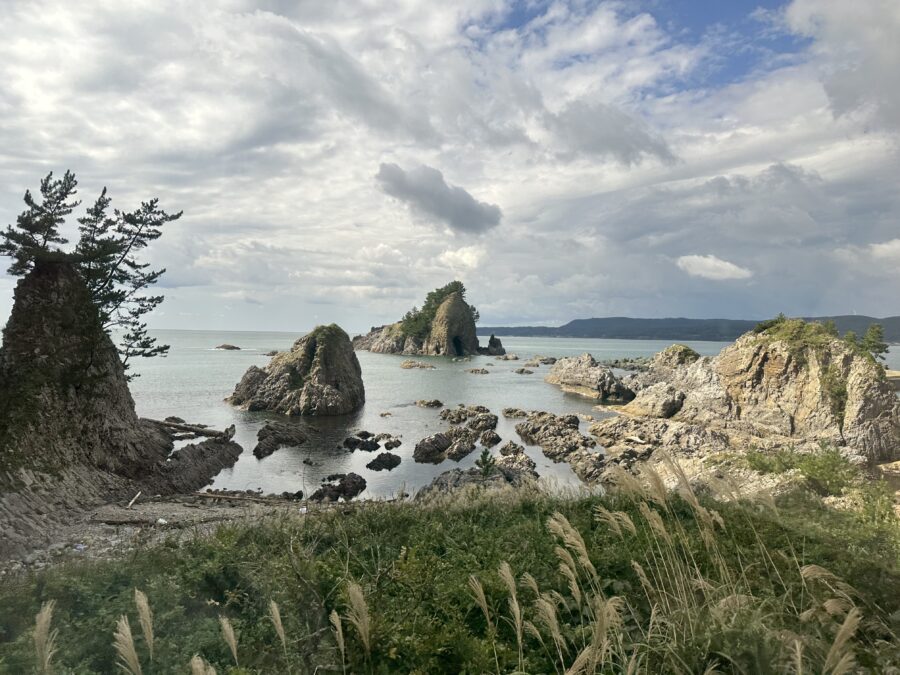
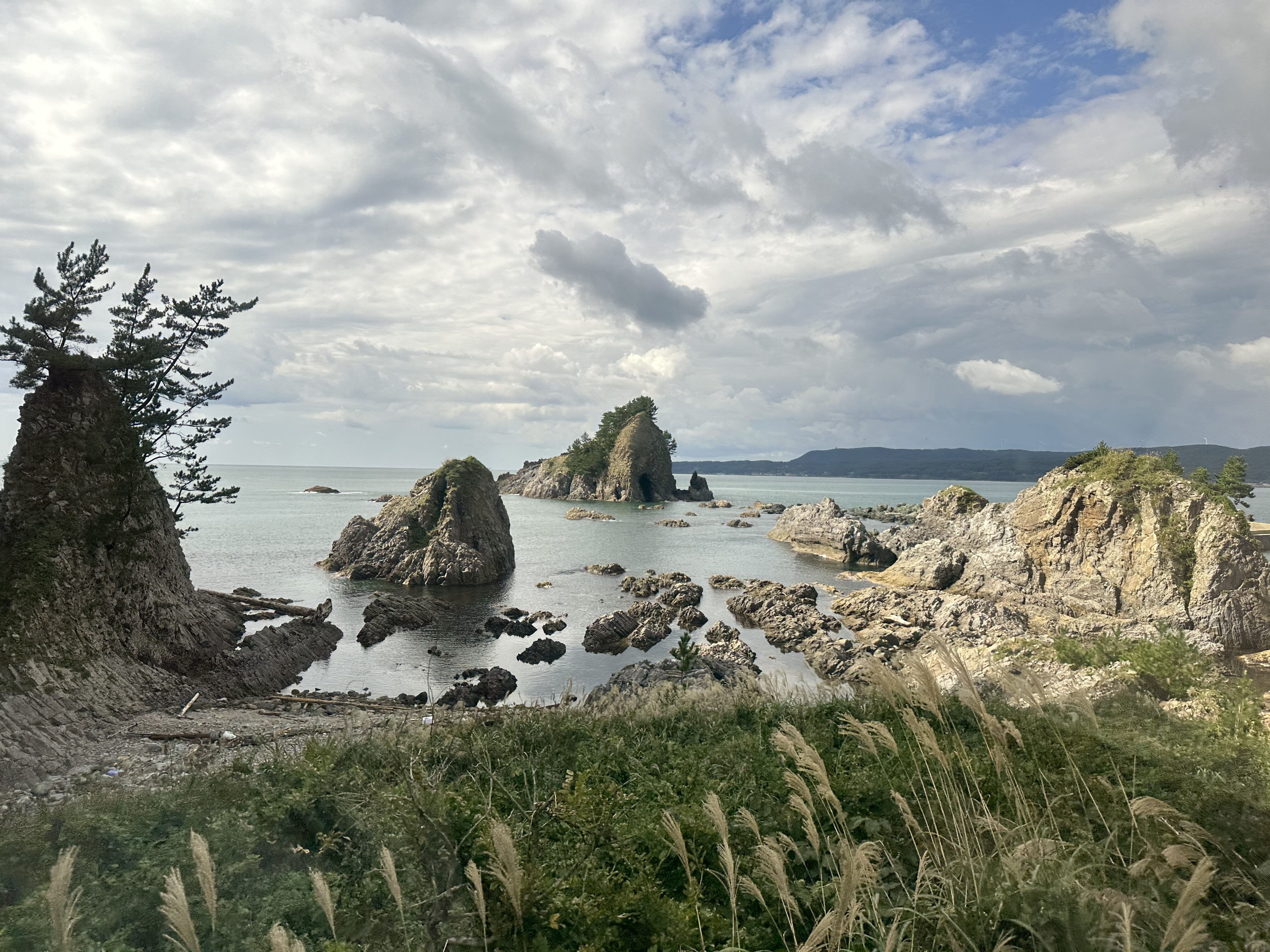
We had gone from gentle rolling rural landscapes to hugging a dramatic and wild coastline. Plunging, jagged rock faces met steely, frothing surf: the Sea of Japan. It felt precarious and thrilling, with the water almost close enough to reach out and touch. Had I just accidentally stumbled upon one of Japan’s great rail trips, when I had just been trying to get from A to B?
Exploring inland
Turns out, this wouldn’t be the only unexpectedly wonderful moment I’d experience in Aomori. Aomori has an incredibly diverse landscape and soon the train segued inland towards the city of Hirosaki, where the drama of the coastline softened to rice paddies and apple orchards (Hirosaki is the apple-growing capital of Japan). That night I slept in a historic ryokan owned by a samurai descendent, who kindly ferried me to dinner at a restaurant specialising in local shamisen music. The wait staff and chef doubled as the house band, turning out folky, county-and-western style tunes as I sipped my beer.
With a lot of ground to cover – Aomori is more than 9,600 square kilometres – I didn’t have long to linger in Hirosaki, moving on two days later to Aomori City, up on the north coast. The city is known in Japan for is huge, week-long Nebuta festival each August, but in quieter September I was able to enjoy its more low-key draws, including nokkedon, a kind of DIY chirashizushi, or “scattered sushi” in the central fish market. After polishing off bowlfuls of rice topped with fresh and fat prawns, tamago, sea urchin and ikura, my guide took me to the nearby UNESCO-listed ancient ruins, San’nai-Maruyama, to discover the background behind Japan’s prehistoric residents, the Jomon people.
Read more about Japan’s Undiscovered North
The next day I once again moved inland, southeast of Aomori City to the Oirase Keiryu Gorge. Cloaked in dense, moss-lined forest, this wild ice-age wonder of rapids and waterfalls, is popular within Japan for its accessible walking trails, particularly in autumn when the leaves begin to turn. But I heard the voices of only a couple of other international tourists as my guide and I snaked along the path that lined the tumbling stream, fed by Towada-ko, the largest crater lake in Japan.
Onwards to the Pacific
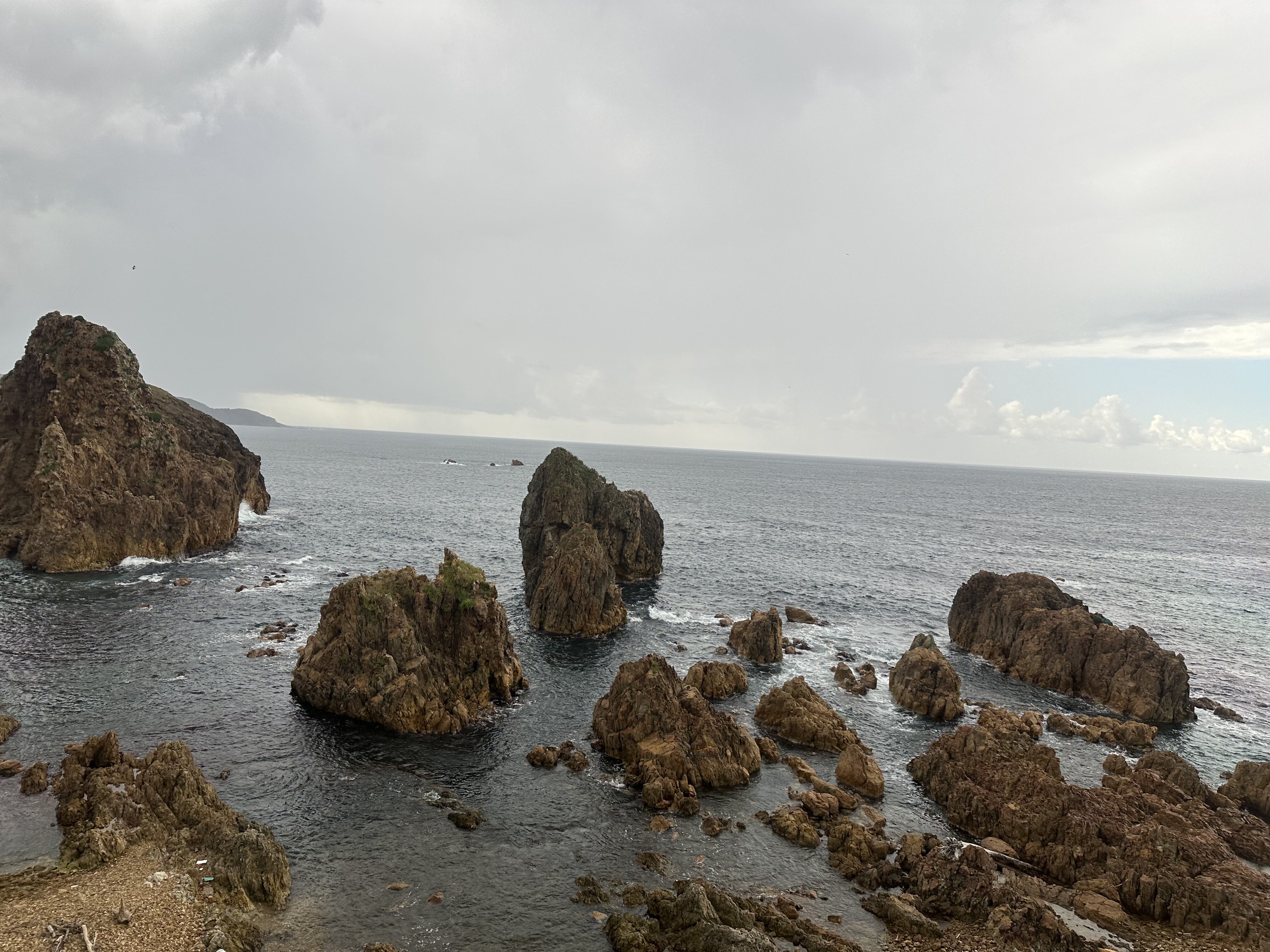
Aomori had much more to give but the final stop on my whistlestop tour brought me – where else? – back to the coast. This time to Hachinohe, on the shores of the Pacific Ocean.
In contrast to the quiet and remote stretches I had witnessed on the Gono Line and the cosmopolitan streets of Aomori City, Hachinohe bore the marks of a major port city, with huge ships cluttering its waterside. The area is particularly known for its first-rate mackerel and squid and though my time here would be brief, I knew I had to taste it.
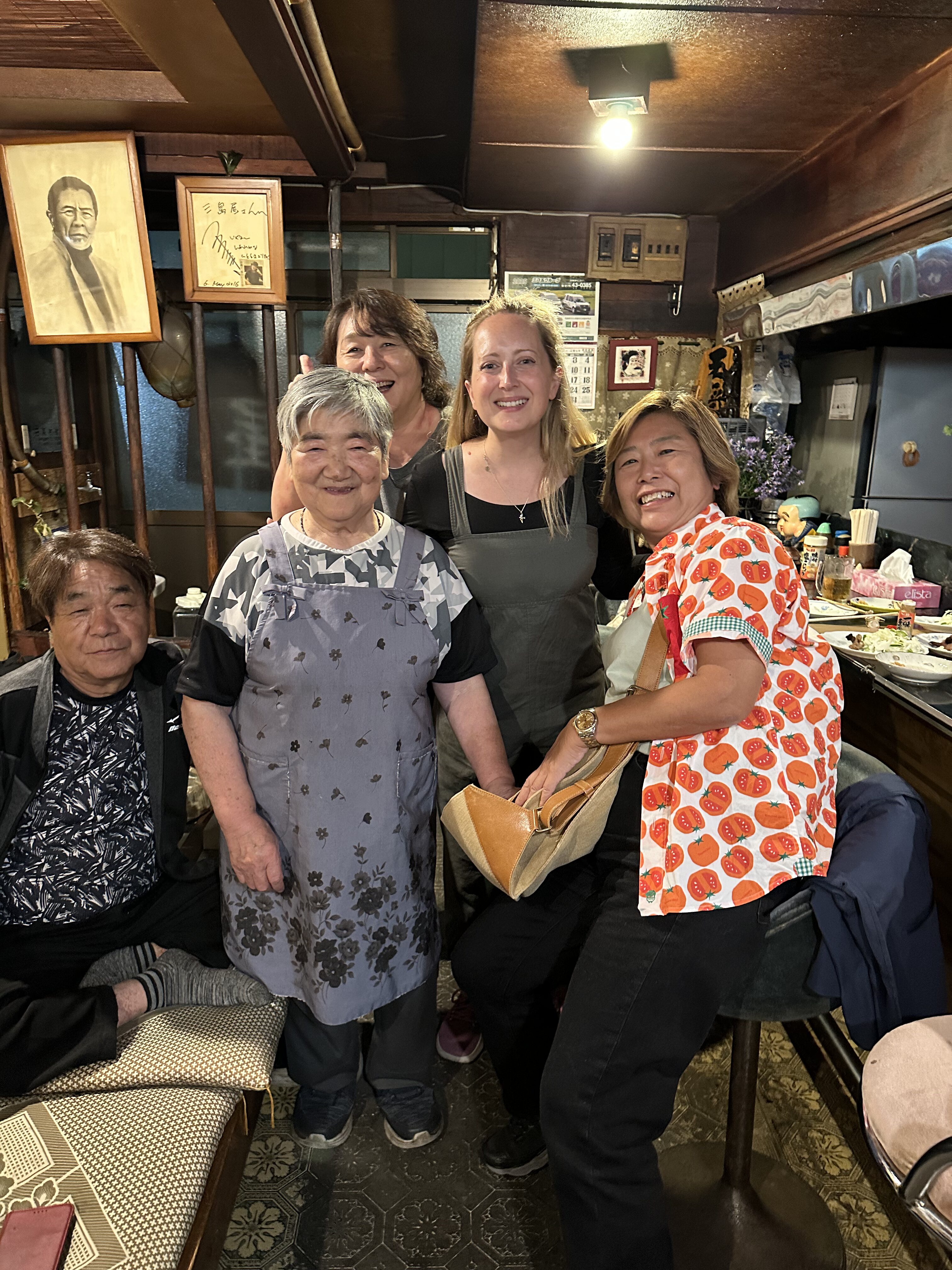
I met my guide Machida-san in Hon-Hachinohe station that evening, where we boarded a commuter train to the quiet waterside district of Same. It all started with the usual introductions; she told me how she was from Osaka and when she moved to Hachinohe with her husband she initially felt a bit lost. On a mission to discover the local area, she would go down to the waterside village of Same, where she discovered some old fishermen’s bars – almost all entirely run by women. Now, as head of her own guiding business, she wanted to show them off to visitors.
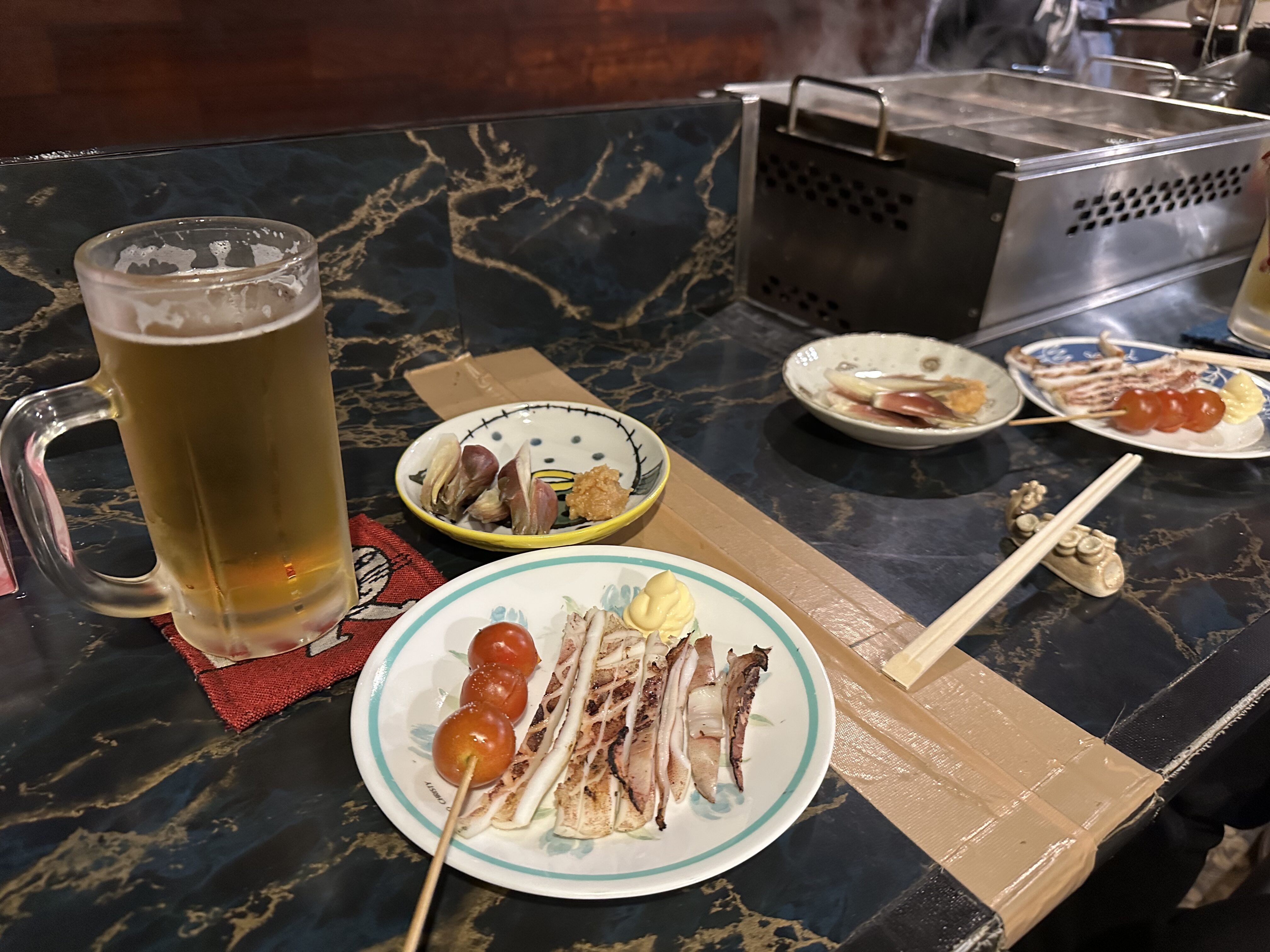
Clutching electric lanterns in hand to light our way on the darkened night-time streets, we moved from tiny bar to tiny bar. As we opened each door to a new intimate, homely space – each one only large enough to hold a dozen or so guests – we’d trade a konbanwa and take up the host’s offer of drinks and small seafood dishes.
As the hours (and bars) passed, our cheeks became reddened by warmth, jolliness and sake, and Machida-san (who kindly acted as translator) and I began to chat merrily with the locals and quiz the elderly bar women. Over sublime grilled mackerel we heard sad stories of the Tohoku earthquake and the decline of the local fishing industry. But we also we heard bright, hilarious tales that made us smile and laugh (some, until we were nearly in tears).
I left Hachinohe – and Aomori prefecture – the next day with the feeling that, as well as enjoying some sublime seafood and getting an insight into local culture, I had made some new friends. Last night’s tour hadn’t entirely been an accident of course but the depth of the shared human connection I experienced in Hachinohe was, most definitely, a surprise. And, most definitely, something I will remember.
Alicia Miller is the travel editor for Women and Home and a freelance travel writer, working with National Geographic Traveller, The Telegraph and The Sunday Times.
She travelled with us on Japan’s Undiscovered North.