Australia
 Canada
 USA
USA

Manners, customs and the Japanese way
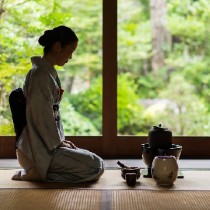
Manners and customs are an important part of many facets of Japanese life. Japanese people grow up picking up the subtleties of this unique culture as they go through life, respecting the invisible and varied societal rules. There are many aspects of this seemingly complicated culture that as a foreign visitor you will not be expected to know, but there are some things that will be easier to grasp than others.
Bowing
One of the most obvious social conventions is the bow. Everyone bows when they say hello, goodbye, thank you or sorry. Bowing is a term of respect, remorse, gratitude and greeting.
If you meet someone in Japan you may wish to give them a little bow, but you do not necessarily need to bow to everyone who bows to you. Entering a shop or restaurant for example, you will be greeted by shouts of irrashaimase (welcome) and a bow from the staff as a sign of respect to you as the customer.
As the customer, you will not be expected to bow back as you could be facing a long bow-off as the staff will feel it necessary to bow back to you. You may prefer to adopt the casual head-nod version of the bow as a sign of acknowledgement when thanked for your purchase at the end of your shopping experience. Many Japanese people use the head-nod in more casual everyday situations.
There are several forms of bowing, such as the 45-degree saikeirei bow used for moments for sincere apology or to show the highest of respect, or the 30-degree keirei bow, which is also used to show respect to superiors. As a visitor to Japan you will probably have no use for either of these.
The eshaku 15-degree bow is semi-formal and used for greetings when meeting people for the first time. You may have more use for this bow during your time in Japan, but you will not be expected to use it and Japanese these days are more than familiar with shaking hands.
Taking off footwear
This is something that confuses many visitors to Japan, but is so easy to understand. It is customary in Japan to take off your shoes when entering a traditional ryokan (guesthouse), a home, temple or the occasional restaurant for example.
Traditionally, the Japanese took off their shoes when entering homes as people would sleep, sit and eat on the tatami-mat floors and footwear worn outside would spread dirt across their living area. Today people still take off their footwear, partly to keep the inside of the building clean, but also as a sign of respect.
As a visitor to Japan, you may not find yourself entering too many private homes but you will probably find yourself in a traditional ryokan or minshuku guesthouse or entering a temple building. In these cases you will be expected to take off your shoes.
As you enter the building you will usually find yourself in the genkan (entrance hall), which will most often be on a slightly different level to the rest of the floor. You may see a sign asking you to take of shoes, you may see lots of shoes sitting neatly or you may see an area or lockers to place your footwear. All of these are signs that you should take off your shoes.
Most Japanese will glide effortlessly in and out of their footwear from genkan to tatami floor in one swift move. As soon as you step out of your shoes, step up straight onto the main floor and to be polite, you might like to turn around and reposition your shoes neatly or put them in the appropriate place. Although you may not have mastered taking off your shoes as well as the Japanese, it is a simple concept that is considered vey important in Japan.
Other social tips
Respect
The suffix "san" is often used when you refer to someone else and is a term of respect. If referring to Mr/Mrs Suzuki, you would say, "Suzuki-san". However, you would never refer to yourself as "-san" and would only use your name on its own.
Eating
Before eating a meal, the Japanese put their hands together and use the term "Itadakimasu" (I humbly receive). After the meal, it is polite to say "Gochiso sama deshita" (thank you for the meal).
Japanese people will understand if visitors do not have proficient use of chopsticks, but there are some rules you should try and follow:
Do not stick your chopsticks into your bowl of rice or pass food around with them. As well as being slightly uncouth, these actions have relevance to the Japanese funeral ceremony.
It is also advisable not to douse your rice in soy sauce. The Japanese are very proud of their rice and this seemingly innocent action may surprise and even offend some ryokan/restaurant owners.
It is not common practice to walk and eat in public and is considered bad manners. You may sit down in a public place and eat or stand at tachi-gui restaurant/shops, but walking and eating is not polite.
Tipping
There is no tipping in Japanese restaurants or other places that many westerners will expect to tip. The Japanese will always give the best service they can and do their jobs proudly. A waiter or chef would certainly not accept a tip for doing their jobs and if you tried to leave one, they would awkwardly return your money, so don't tip.
Featured trips
-

Self-Guided Adventure
World Heritage (Classic)
- Tokyo
- Nikko
- Kyoto
- Mount Koya
- Himeji
- Hiroshima
- Kanazawa
- Shirakawago
- Tokyo
With a wide range of incredible World Heritage Sites, Japan is the perfect destination for this classic 17-night cultural and historical adventure.
17 nights: from US$6078 pp (twin share) Read more >
-
Small Group Tour
Japan Unmasked (IJT Essential)
- Tokyo
- Nagano
- Matsumoto
- Takayama
- Kanazawa
- Kyoto
- Hiroshima
- Kurashiki
- Tokyo
Our Insiders describe Japan Unmasked as a bit like an introductory sampling platter of all Japanese culture – experiencing the best that Japan has to offer, including those places you may not have heard of. So you can explore those in-between places where so much of Japanese life happens.
13 nights: US$4753 Read more >
-
Small Group Tour
Discover Japan (IJT Essential)
- Tokyo
- Hakone
- Lake Biwa
- Kyoto
- Tokyo
Our original great value Japan tour
9 nights: US$3451 Read more >
 Inside Japan UK office
 Inside Japan US office
 Inside Japan Australia office
 Inside Japan - Japan office