Australia
 Canada
 USA
USA
Japan Rail Pass FAQ
Your questions answered
Below you will find the most commonly asked questions regarding the Japan Rail Pass.
If you can't find the answer to your query here please give us a call on 0117 370 9750 and we will be delighted to help.
- So you send me a voucher and I exchange this in Japan?
- How do I exchange my voucher for the actual pass?
- Can I check how much train tickets cost before I get to Japan?
- So you send me a voucher and I exchange this in Japan?
- Can I reserve seats with the Japan Rail Pass?
- Can I reserve seats before my arrival in Japan?
- On which trains can I use the Japan Rail Pass?
- How can I find out whether my trips will be covered by JR trains?
- Are there any Shinkansen (bullet trains) that I can't use?
- What's the difference between ordinary class and 'Green car' (first-class)?
- I am only making a couple of train journeys - is it worth me getting a rail pass?
- I will be in Japan for about 10 days. Should I get a 7 day or 14 day pass?
- Can I use the Japan Rail Pass on the subway in Tokyo?
- Which rail pass do I need?
- Where can I find the terms and conditions for Japan Rail Pass purchases?
- I don't speak any Japanese, and I am worried that I will not be able to navigate around Japan…
So you send me a voucher and I exchange this in Japan?
Yes, that's right. We send you what is known as an 'exchange voucher' for the Japan Rail Pass. When you arrive in Japan you will need to exchange the voucher for an actual rail pass itself. When you make the exchange you can state the date you want to start using the pass, so you do not have to start using it on the day you make the exchange
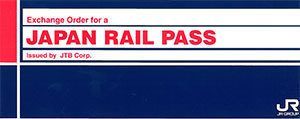
How do I exchange my voucher for the actual pass?
Good question! InsideJapan Tours' very own Harry Sargant reluctantly agreed to be the model for this helpful instructional video slideshow (apologies for the music - hard to know what to choose for a video about exchanging a rail pass!).
Can I check how much train tickets cost before I get to Japan?
You can find out the cost of any train journey in Japan, as well as checking timetables and even platform numbers using Hyperdia.
So you send me a voucher and I exchange this in Japan?
We send you a voucher for the Japan Rail Pass. When you arrive in Japan you will need to exchange the voucher for an actual rail pass itself. When you make the exchange you can state the date you want to start using the pass, so you do not have to start using it on the day you make the exchange.
Can I reserve seats with the Japan Rail Pass?
Once you have exchanged your Rail Pass voucher in Japan, you can make seat reservations for no extra charge. You can do this at any station and as many days in advance as you like, as long as you have exchanged your voucher for a Japan Rail Pass. Please note that during peak periods at Narita Airport you may only book a seat for your airport transfer and not subsequent trains.
Can I reserve seats before my arrival in Japan?
Ordinarily you need to have exchanged your voucher for an actual Japan Rail Pass before you can make seat reservations. JR East offers a service whereby it is possible to reserve seats for some lines before arrival in Japan but there are penalties if you do not pick up the seat reservation tickets. Unfortunately this is not something we are able to help you with. See here for details.
On which trains can I use the Japan Rail Pass?
The Japan Rail Pass is valid on almost all JR trains, which cover almost the whole country. The Japan Rail Pass is not valid on private (non-JR) lines, but usually where there are private lines there is also a JR alternative. You can even use the Japan Rail Pass on JR buses and the JR ferry between Hiroshima and Hiroshima.
How can I find out whether my trips will be covered by JR trains?
Visit Hyperdia, and in the search details untick 'private railway'. Remember to also untick 'Nozomi / Mizuho' as these are not valid with the Japan Rail Pass.
Are there any Shinkansen (bullet trains) that I can't use?
There are different grades of Shinkansen, which determine how many stops they make along each line. The Nozomi and Mizuho Shinkansen trains make the fewest stops, making them something of a 'commuter's express' and often not the most useful for foreign visitors. Other Shinkansen trains hit very nearly the same top speed as the Nozomi and Mizuho but stop at all the major cities along the way, meaning they are often the most useful services for visitors. The Japan Rail Pass is not valid on the Nozomi or Mizuho Shinkansen.
What's the difference between ordinary class and 'Green car' (first-class)?
Ordinary class travel in Japan is of a very high standard - trains are clean and seats are generously sized with plenty of leg room, especially on the Shinkansen. First-class Green carriages provide extra comfort with increased leg room and wider seats. They tend not to get as full as the standard carriages, where seats can be at a premium during rush hour and peak travel seasons.
I am only making a couple of train journeys - is it worth me getting a rail pass? Almost certainly! You will very nearly make back the cost of a 7-Day Japan Rail Pass on just a return trip between Tokyo and Kyoto, so all you need to do is make a couple of smaller journeys or airport transfers and you are already getting incredible value for money! Individual tickets on the Shinkansen are rather expensive, so you can make considerable savings with the Japan Rail Pass.
I will be in Japan for about 10 days. Should I get a 7 day or 14 day pass?
Even if you are not in Japan for the full 14 days it may be worth you getting the 14 day pass. Just one long trip on the Shinkansen from Hiroshima to Tokyo can cover the price difference between the 7 and the 14 day pass. If all your long journeys fit within 7 days, a 7 day pass will be best value and you can easily buy extra individual tickets in Japan for short, inexpensive journeys. Check Hyperdia for details of fares.
Can I use the Japan Rail Pass on the subway in Tokyo?
The Japan Rail Pass will NOT cover you on the subway or on any of the private (non-JR) overland train lines. For this you will need a PASMO card.
Which rail pass do I need?
If you intend to visit Tokyo and Kyoto (as most visitors to Japan do!) then it is Japan Rail Pass you will need. If you are planning to base your trip in just one region of Japan, it might be more cost effective to buy a regional pass. Details of Regional Passes can be found here.
Where can I find the terms and conditions for Japan Rail Pass purchases?
Full terms and conditions can be found here.
I don't speak any Japanese, and I am worried that I will not be able to navigate around Japan…
There are English signs at most train stations and Japanese people are always willing to help you, even if their English is not fluent. However, if you would benefit from a little extra help, please contact us to discuss our Small Group Tours or Self Guided Adventures.
For more information email us: [email protected] or call: + 44 117 244 3380
-

Self-Guided Adventure
From Shogun to Shinkansen (Superior)
- Tokyo
- Kiso Fukushima
- Nagoya
- Kyoto
- Hiroshima
- Tokyo
Travel Japan's history from samurai strongholds to modern bullet trains, with time outdoors and space for family fun.
12 nights: from US$24952 (Per Family) Read more >
-
Self-Guided Adventure
Kyushu Adventure (Classic)
- Nagasaki
- Kagoshima
- Yakushima
- Kirishima National Park
- Kumamoto
- Kurokawa Onsen
- Fukuoka
If you're an adventurous traveller who wants to discover a side of Japan rarely seen by outsiders, this itinerary could be the one for you.
13 nights: from US$3252 pp (twin share) Read more >
-
Self-Guided Adventure
Manga & Anime (Classic)
- Tokyo
- Kyoto
- Osaka
This classic itinerary introduces the best of Japan with a manga and anime twist - from Studio Ghibli to interactive art at teamLab to Kyoto's International Manga Museum.
10 nights: from US$3266 pp (twin share) Read more >


 Inside Japan UK office
 Inside Japan US office
 Inside Japan Australia office
 Inside Japan - Japan office