Australia
 Canada
 USA
USA
Insider Experience: Sumo stable visit
Step inside the world of sumo wrestling with a visit to a sumo stable in Tokyo to see a morning training session
Sumo is Japan's national sport and a national obsession. To become a wrestler requires years of strict training at a heya, or stable as it is known in English. This is where the wrestlers eat, sleep and train. There are 47 stables in Tokyo today and a wrestler will stay with the same stable throughout his career.
InsideJapan Tours have built up a special relationship with one of the sumo stables which means we can arrange exclusive access for you to watch a morning training session. You'll be accompanied by one of our "Insiders" who'll explain all about the sport and the strict etiquette for spectators watching the wrestlers train. In our safe hands you won't have to worry about making a cultural faux pas! A highlight of the training session is the "king of the castle" wrestling session where the winner stays on.
We must stress that this experience is not for everyone! You will be expected to sit on the floor for 90 minutes in complete silence so as not to disturb the wrestlers. You must sit cross-legged or with your legs tucked to one side. You are not allowed to sit with your legs stretched out in front of you as it's taboo to show the soles of your feet to the wrestlers. If you get uncomfortable, you won't be able to speak to your guide to ask to leave. Children under 12 are not allowed at all. But if you can stick to these rules, you're in for a truly authentic experience. It's remarkable that sumo stables open their doors to the public at all as this is the equivalent of watching premiership footballers or soccer stars in training.
For more information email us: [email protected] or call: + 44 117 244 3380
A quick note about our experiences: Our experiences are designed to be part of a complete, tailor-made travel package and are not available to book individually. This allows us to ensure every detail – from accommodation to transport – is perfectly coordinated for you. If you're interested in one of these experiences, we'd love to help you build a full itinerary around it!
Interested in this Experience? It is included in this tour:
-
Tokyo, Kyoto, Osaka, and Nagoya—plus time on the old Nakasendo. A classic route with samurai connections and space to slow down.
Samurai Footsteps
Walk in the path of warriors on this trip through Japan's cities and countryside, tracing the legacy of the samurai.


Other Modern sports experiences
View more >
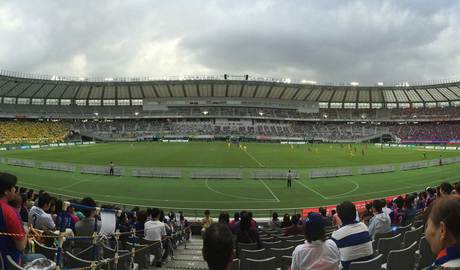
J-League football
Join enthusiastic Japanese football fans chanting for their favourite team at a J. League match.



Tokyo Marathon
Join 30,000 runners on Tokyo's fantastic marathon course, tried and tested by our very own Harry Sargant!

Baseball
The Japanese love their baseball and it's a lot of fun to join the supporters at a home game.
 Inside Japan UK office
 Inside Japan US office
 Inside Japan Australia office
 Inside Japan - Japan office